

On the eve of the celebration of Gratitude Day, on February 27, 2026, a charity fair was held at the Faculty of History, Economics and Law, bringing t Read more
Quotation gallery
The knowledge of a trade is worth a handful of gold.
Scottish Proverb
Faculty News
On February 27, 2026, in anticipation of the «celebration of Gratitude Day», the Faculty of History, Economics, and Law hosted a warm gathering and a Read more
On February 27, 2026, the Faculty of History, Economics and Law held a career guidance meeting with students of the «Foundation» program and future ap Read more
27 февраля 2026 года студенты 7 курса под руководством куратора М. Мурзабаевой в рамках мероприятий, приуроченных к празднованию Дня благодарности, по Read more
24 февраля 2026 года на базе Северо-Казахстанский высший медицинский колледж имени Жұмағали Тлеулина КГУ «УЗ акимата СКО» прошла областная олимпиада п Read more
25.02.2026 на базе медицинского факультета состоялась лекция на тему «Посмертное донорство в Казахстане: выбор, который спасает жизни», организованная Read more
On February 19, 2026, students of the Faculty of History, Economics, and Law actively participated in the large-scale action «Nashakorlykka Zhol Zhok! Read more
On February 19, 2026, the Faculty of History, Economics, and Law held an explanation of the draft new Constitution of the Republic of Kazakhstan. The Read more
19 февраля 2026 года студенты 4 и 7 курсов медицинского факультета провели благотворительную акцию и посетили Дом ребёнка в г. Петропавловске. Инициат Read more
As part of the activities of the Kozybayev Alumni Association, a meeting was held at the Faculty of History, Economics, and Law, which became a signif Read more
Development of a Neural Network Model for UAV Recognition through an Optical-Electronic Channel Integrated into the Data Fusion System
This research is funded by the Science Committee of the Ministry of Science and Higher Education of the Republic of Kazakhstan (grant No. AR19679009).
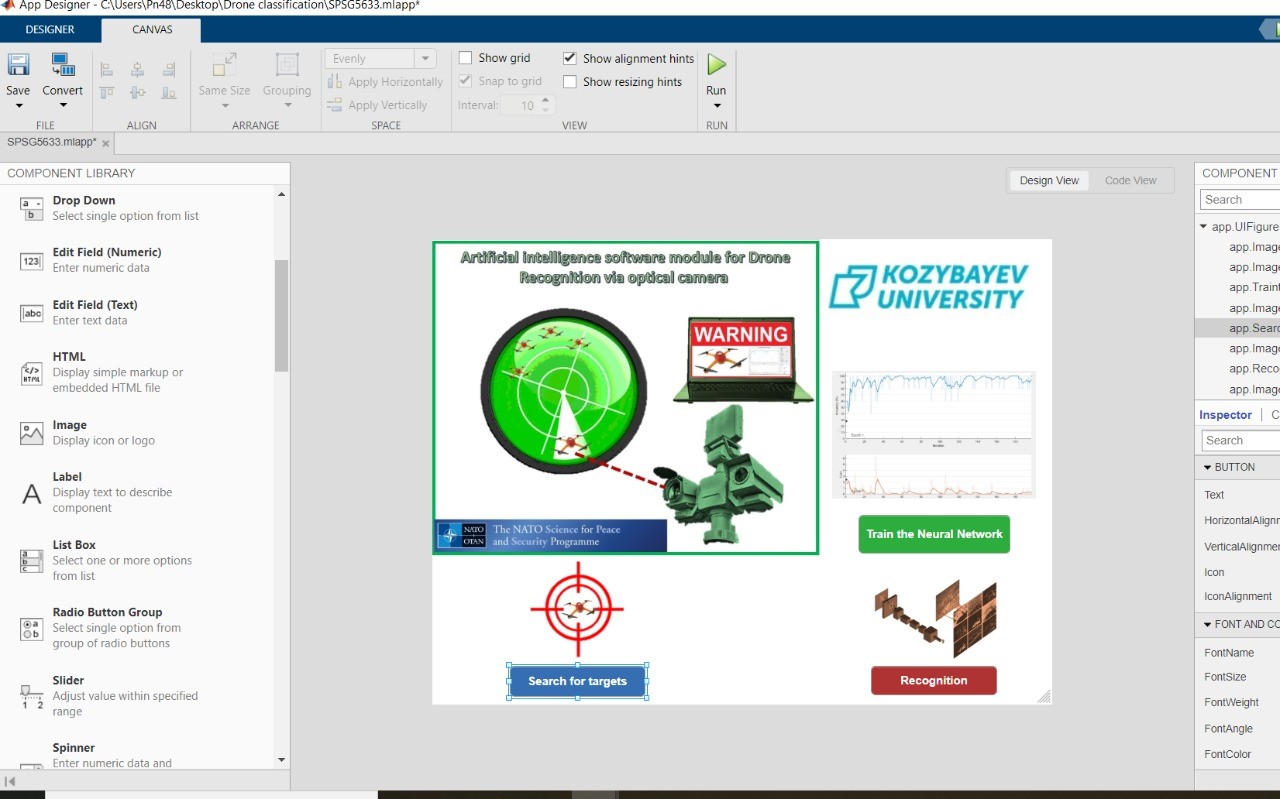
Project Manager: Kurmashev I.G., Candidate of Technical Sciences.
Project Performers: Kurmashev I.G., Candidate of Technical Sciences, Serbin Vasily Valeryevich, Candidate of Technical Sciences, Arrichiello Filippo, Doctor of Technical Sciences, Semenyuk V.V., Master, Alyoshin D.V., Master, Kryuchkov V.N., Master, Kurmasheva L.B., Master.
Implementation period: 2023 – 2025.
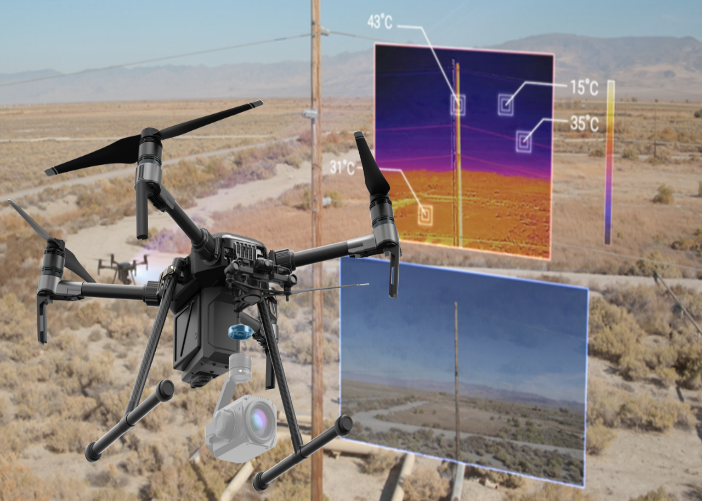
Project goal: To develop a software model for UAV recognition based on neural networks, adapted to the "FMCW radar + video surveillance" platform, performing high-quality and highly accurate recognition, classification, and differentiation of these objects from birds by analyzing the optical channel and micro-Doppler characteristics of the target. Expected outcomes: Development of a software model for UAV recognition based on algorithms of two types of neural networks, adapted to the optical and radar channel of the "FMCW radar + video surveillance" system. Project description: The project idea is to create a neural network software model, one part of which is designed for UAV recognition through radar imaging of micro-Doppler signatures, ensuring more accurate classification of drones and birds. The second segment of the software model defines a neural network application for UAV recognition through video data and photo images of objects in the airspace (quadcopters, "flying wing" UAVs, birds, etc.). The unique feature of this development lies in its adaptation to an Anti-Drone radar system with a software-hardware platform based on "Radar + Optical Channel" as an automation element for UAV recognition using two detection channels. The performance and effectiveness of the developed software model depend on the characteristics of the radar system and optical camera, making the selection and justification of the radar model and surveillance tool a key task. Additionally, the project will present the mathematical characteristics of radar signal reflection from targets with vibration sources, determining Doppler indicators for recognizing flying objects (UAVs and birds). The structural description of the Data Fusion system, into which the developed software model is integrated, along with the characteristics of the neural network algorithms serving as the basis for classification and recognition software within the research framework, will also be provided.